Kilowatt Blueprint earns referral commissions from qualifying purchases made through external merchant links at no additional cost to you. How Kilowatt Blueprint is funded
There is no single best portable power station. The right pick depends on what you need to run, for how long, and how far you have to carry it. This guide sorts six marketplace listings by capacity class and output, explains what each listing actually states, and flags what remains unverified before you buy.
Evidence note. Every product fact below comes from the seller listing title or a seller image attached to that listing. These are seller-advertised claims, not independent test results. Star ratings and review counts were not supplied for these listings, so they are not shown. Prices are changeable reference prices captured 2026-10-22; check the current price, variant and delivery to your address at checkout.
How to size a power station in two numbers
Two figures decide most purchases.
- Capacity, in watt-hours (Wh). This is the energy stored. A larger number means longer runtime for the same devices. The listings here span roughly 256Wh to 2048Wh.
- Continuous output, in watts (W). This is the most power the station can deliver at once. A device that draws more watts than the station's continuous rating will not run, no matter how big the battery is. Surge ratings (a momentary peak, often double the continuous figure) matter for devices with motors that spike at startup, but only briefly.
A rough runtime estimate is capacity divided by device wattage, minus conversion losses the seller does not quantify. Treat that as an upper bound, not a promise. Check the wattage label on your actual devices rather than guessing.
The six listings at a glance
All six use LiFePO4 (lithium iron phosphate) battery chemistry as stated in their listing titles. LiFePO4 is commonly associated with longer cycle life than other lithium chemistries, though cycle-life figures vary by product and were not supplied for these listings.
| Listing | Capacity | Continuous output | Surge | Reference price |
|---|---|---|---|---|
| ALLPOWERS VOLIX P300 | 256Wh | 300W | 600W (peak) | $128.79 |
| OSCAL PowerMax 1800se | 1024Wh | 1800W | 3600W | $371.19 |
| BLUETTI Elite 100 V2 | 1024Wh | 1800W | Not verified | $386.69 |
| IEEtek P3200 | 2048Wh | 3200W | Not verified | $578.19 |
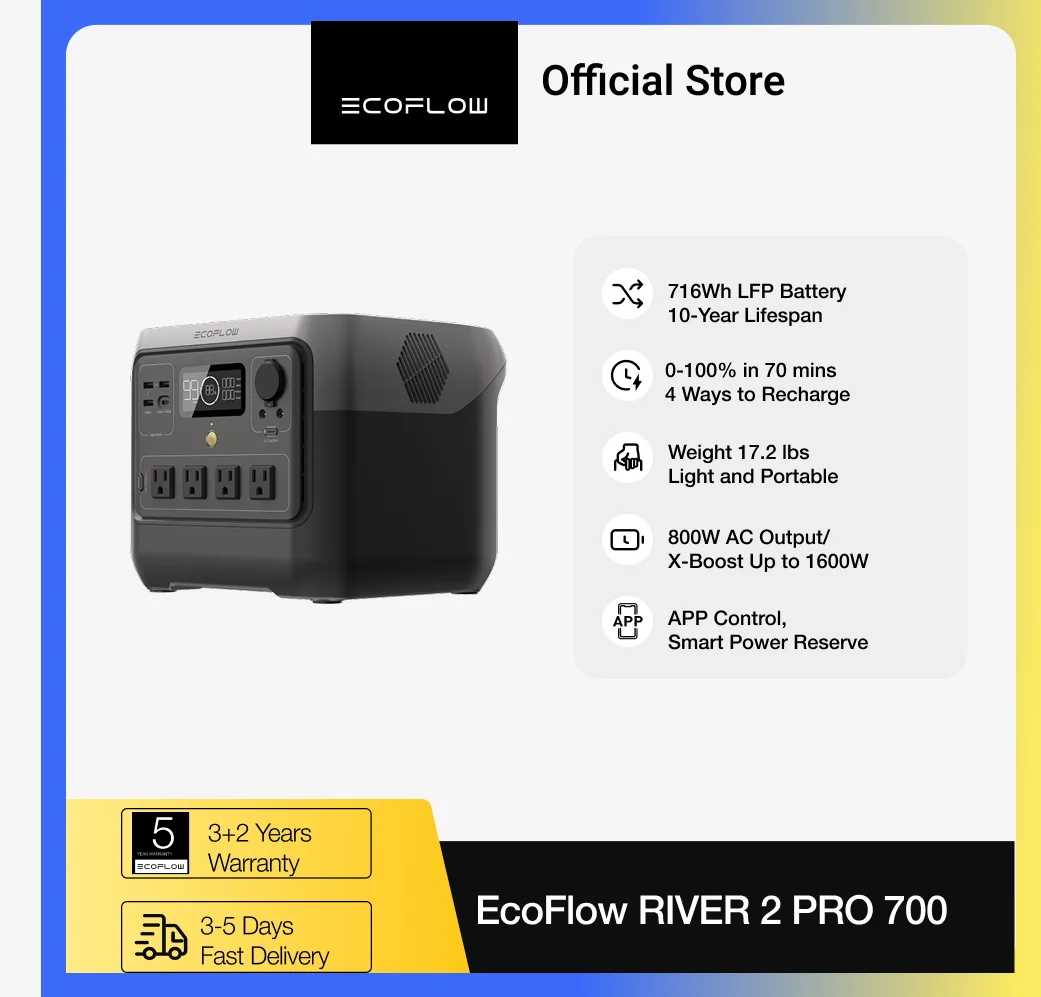
| ECOFLOW DELTA 3 Classical Dark 1000 | 1024Wh | 1800W | Not verified | $516.12 |
| OUKITEL P1000 PLUS | 1024Wh | 1800W | 3600W | $358.09 |
All figures are seller-advertised claims from listing titles or seller images. Prices are changeable reference prices captured 2026-10-22 and may differ at checkout.
Small and light: the 256Wh class
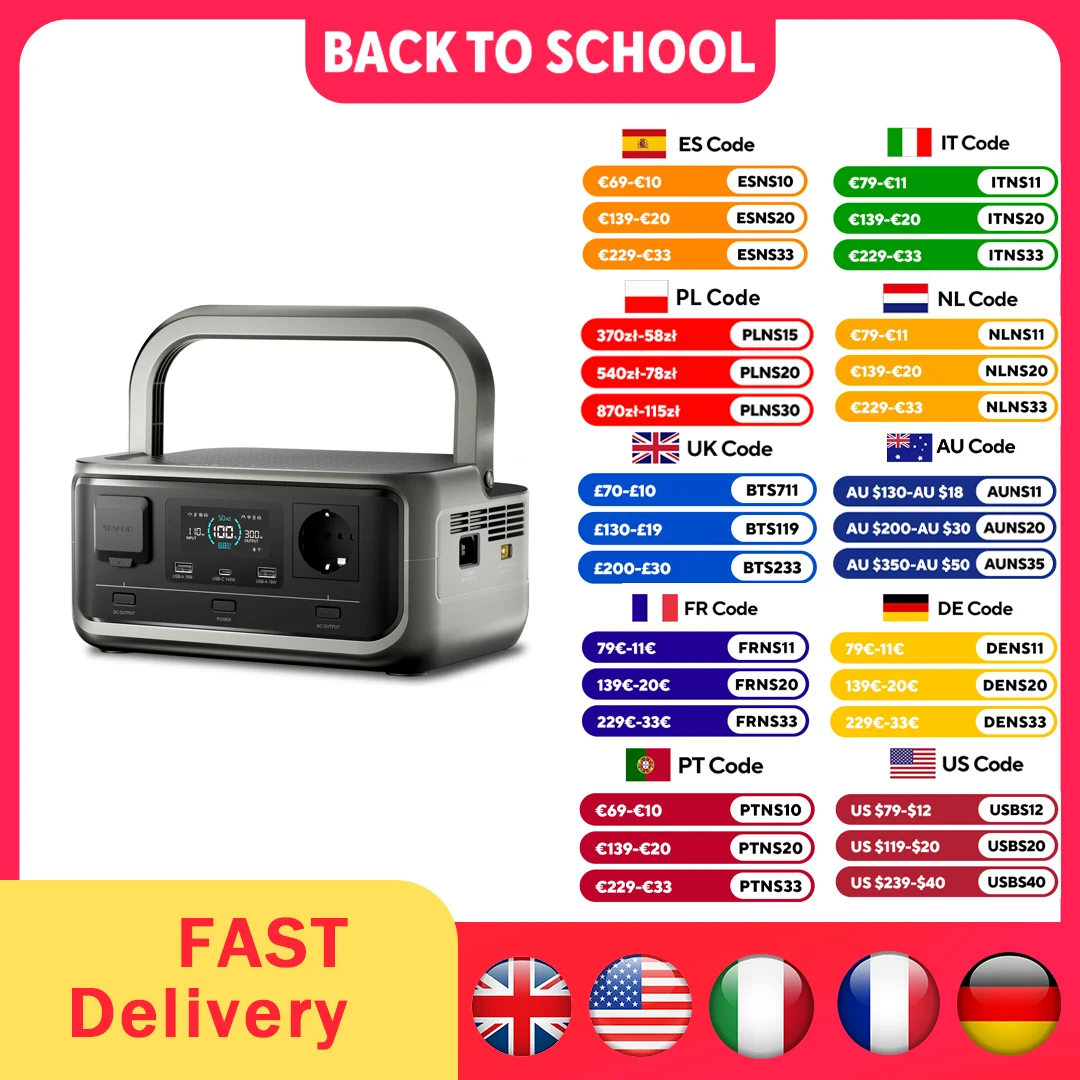
The ALLPOWERS VOLIX P300 is the smallest station here at 256Wh with a 300W continuous output (600W peak). That class suits phones, tablets, laptops, small fans and LED lighting, and it is the easiest size to carry to a campsite or keep in a car.
It will not run coffee makers, electric grills, hair dryers or most appliances that draw more than 300W. If you need to power anything with a heating element, look at the larger classes below.
Ask the seller: What charging cables are included? The listing does not state whether a wall adapter, car charger or solar input cable comes in the box. Confirm the AC outlet type matches your region.
Mid-size all-rounders: the 1024Wh class
Four listings sit in the 1024Wh class with 1800W continuous output: the OSCAL PowerMax 1800se, BLUETTI Elite 100 V2, ECOFLOW DELTA 3 Classical Dark 1000 and OUKITEL P1000 PLUS. This is the most common size for camping, RV use and home backup of small loads, and it runs most kitchen appliances, power tools and medical devices that draw under 1800W, though you should check each device's wattage.
OSCAL PowerMax 1800se
The OSCAL listing advertises 1024Wh capacity, 1800W continuous output, 3600W surge, a 1-hour fast charge, UPS function, solar generator capability and app control. The seller image additionally shows a 5-year warranty badge and three AC outlets. UPS (uninterruptible power supply) function means the station can switch to battery power quickly when grid power drops; the seller's image claims a switch time of under 10 milliseconds, which is an advertised figure.
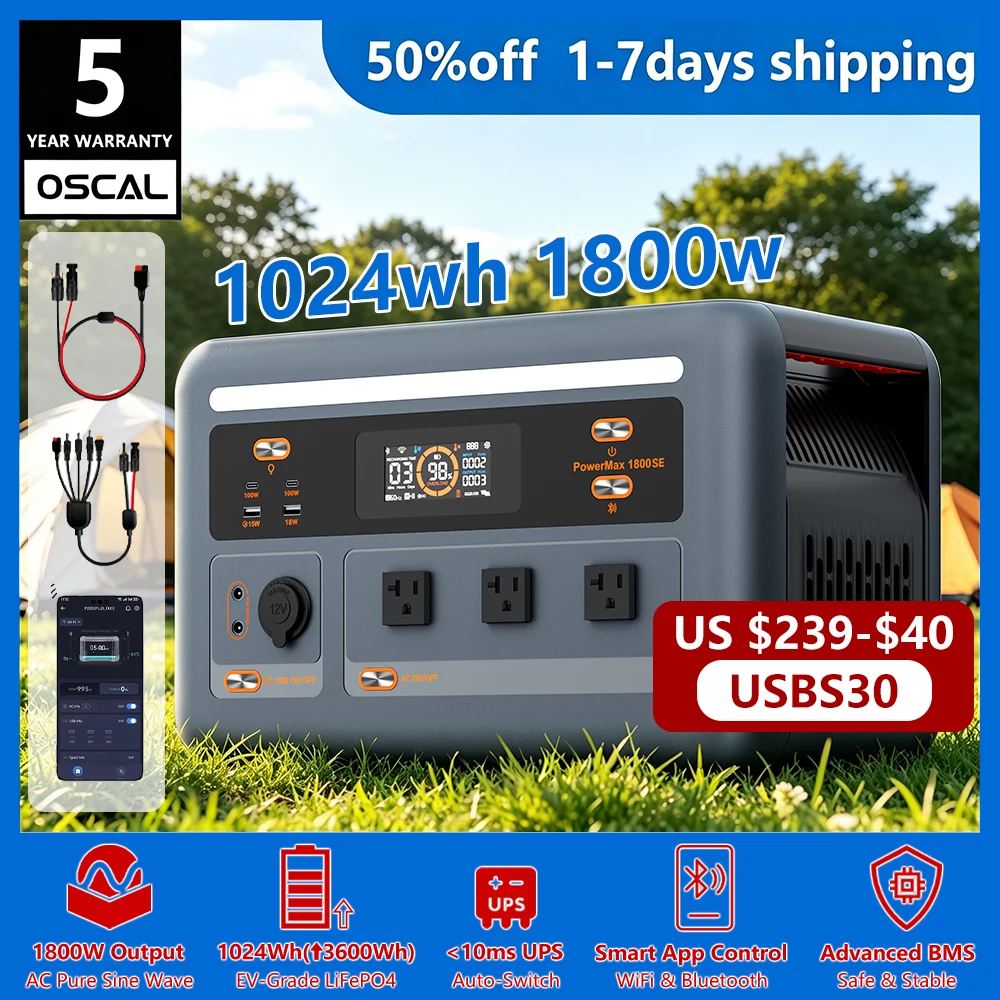
Ask the seller: Is the 1-hour fast charge claim measured from 0% to 100%, or to a partial charge? What solar panel wattage does the station accept, and is a solar cable included? The seller image shows cables, but the listing title does not confirm what ships in the box.
BLUETTI Elite 100 V2
The BLUETTI listing advertises 1024Wh capacity, 1800W output and positioning for camping and emergency backup. A seller image shows 11 outputs, 10ms UPS switching and 45-minute fast charge to 80%, along with a 5-year warranty badge. Those figures are advertised, not tested here.

Ask the seller: Does the fast-charge claim require a specific wall charger, and is that charger included? The 11-output count in the seller image includes DC and USB ports; confirm how many AC outlets the unit actually has for your use.
ECOFLOW DELTA 3 Classical Dark 1000
The ECOFLOW listing advertises 1024Wh LiFePO4 capacity, 1800W AC output and 100W USB output. A seller image shows 0-80% AC charging in 45 minutes, a 26.7 lb weight, 6 output ports, app control and a 3+2 year warranty badge.
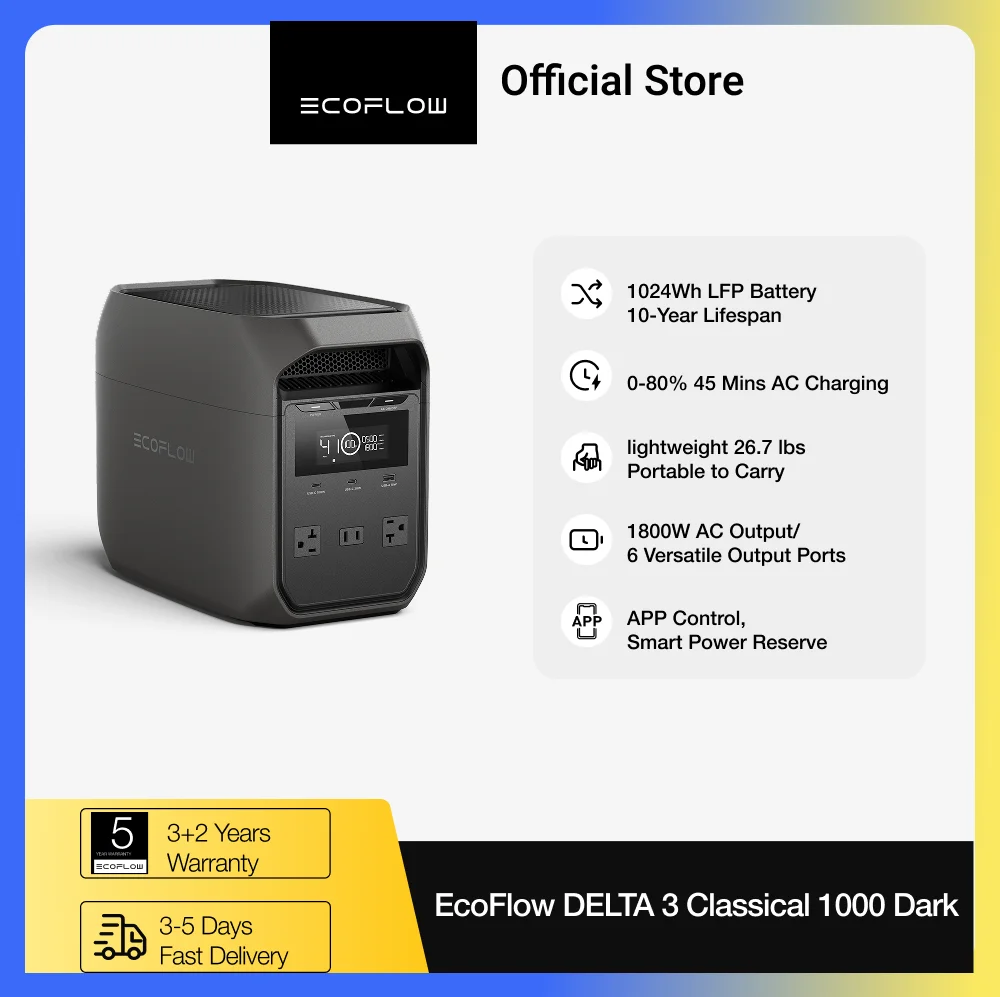
Ask the seller: The listing title is truncated (it ends mid-word at "USB-"). Confirm the full port list and the exact warranty terms before buying.
OUKITEL P1000 PLUS
The OUKITEL listing advertises 1024Wh capacity, 1800W continuous output, 3600W surge, a 1-hour super fast charge, and lightweight design for home backup, camping and hurricane emergencies. The listing does not state the exact weight; ask the seller if portability is a deciding factor.
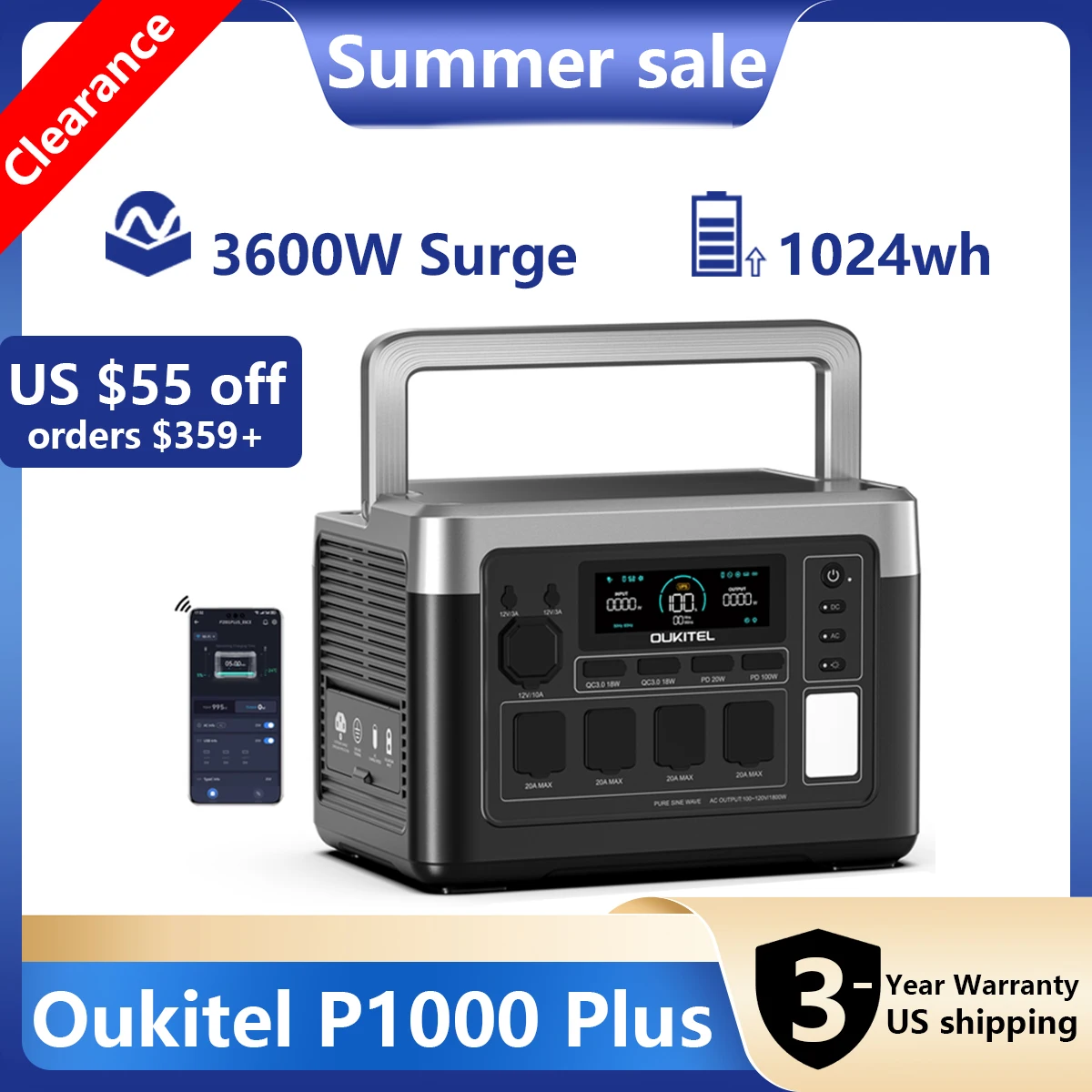
Ask the seller: How much does the unit weigh, and what charging cables and solar connectors are included?
Heavy-duty home backup: the 2048Wh class
The IEEtek P3200 is the largest station here at 2048Wh with 3200W continuous output. The listing claims it can supply 16 devices simultaneously. A seller image shows wheels and a pull handle, which would make it easier to move despite the larger battery, plus a 1-year warranty badge.
This class suits extended home backup, running larger appliances, or powering a work site. It is the least practical to carry far, so it fits best where it stays near a wall outlet or vehicle.
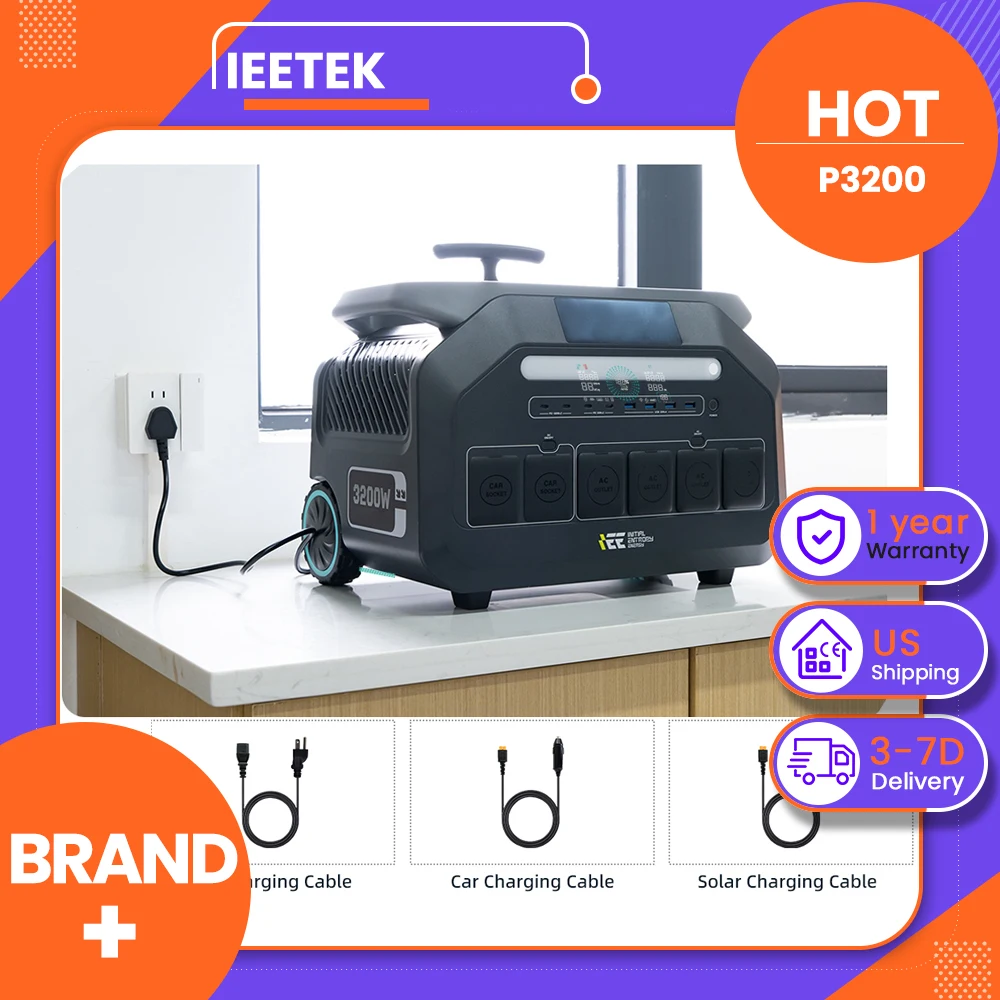
Ask the seller: The 16-device claim does not state the total simultaneous wattage; confirm what the unit can power at once without exceeding its rating. Confirm the outlet types and whether the pull handle and wheels are standard on this variant.
Questions to ask before any purchase
- What comes in the box? Several listings show cables or accessories in seller images that may not be included. Ask for a written list.
- What is the outlet type? Listings sold through international marketplaces may ship with EU, US, UK or other plug types. Confirm the variant matches your region.
- What is the warranty? Warranty badges appear on some seller images but not in the listing titles. Ask for written warranty terms and who services the unit.
- What is the current price and delivery estimate? Prices change frequently. Confirm the final price, shipping cost and delivery window to your address at checkout.
- What solar panel is compatible? If you plan to charge from solar, confirm the input voltage range and connector type, and whether a panel is included.
What this guide does and does not cover
This comparison is based on seller listing titles and seller images for six marketplace products, captured 2026-10-22. It is not based on hands-on testing or independent laboratory results. Seller images may show accessories, cable types or features that vary by variant, and image labels are listing claims rather than independent verification.
Star ratings and review counts were not supplied for these listings and are therefore not shown. Where a figure is absent from the listing data, this guide says so rather than guessing.
Before buying, open the listing, confirm the current price, verify the variant, check the plug type, and ask the seller about anything this guide flags as unverified.